Observing Nature's Rhythms: A Phenology Primer With Nathan Binnema
Phenology tracks seasonal events like when plants leaf out, birds migrate, or ice breaks on rivers. Nathan Binnema introduces this observational practice, showing how repeated visits to one place reveal patterns in weather, plants, animals, and your own attention.
Register Here
Phenology: Reading Nature’s Seasonal Calendar Overview
Phenology is the practice of paying attention to recurring seasonal events and tracking those observations through time.
When does river ice break? When do aspen catkins bloom? When do crows return in numbers?
These events happen on rough schedules each year, responding to temperature shifts, daylight changes, and moon phases. Recording what you notice builds a calendar grounded in your local ecology rather than arbitrary dates.
Nathan Binnema has been practicing phenological observation for three years at a single site in Edmonton’s river valley.
His approach combines repeated visits, careful notation, and attention to both solar and lunar cycles. He brings insights from his study of Blackfoot phenology with Ryan First Diver, adapted for accessible community learning.
This session introduces phenology as a tool for deepening ecological literacy. Nathan walks through what to observe, how to track patterns, and why this practice matters for understanding the places we live.
You’ll leave with a framework for starting your own phenological observations, whether at a backyard garden, a neighborhood park, or anywhere you return to regularly.
What You’ll Learn
- What phenology is and how observational practice builds ecological knowledge over time
- Key events to track in Edmonton’s river valley, including ice thaw, plant emergence sequences, bird migrations, and insect appearances
- How to structure observations using both solar seasons and lunar cycles as time markers
- Patterns Nathan discovered through three years of monthly visits to one location
- Why repeated visits matter for noticing changes that single observations miss
- Practical starting points for beginning phenological practice in your own neighborhood or watershed
- Connections between observations and ecological systems like pollination timing, food webs, and habitat use
About the Speaker
Nathan Binnema served on the Edmonton Permaculture Guild board for several years and remains active in Edmonton’s regenerative community.
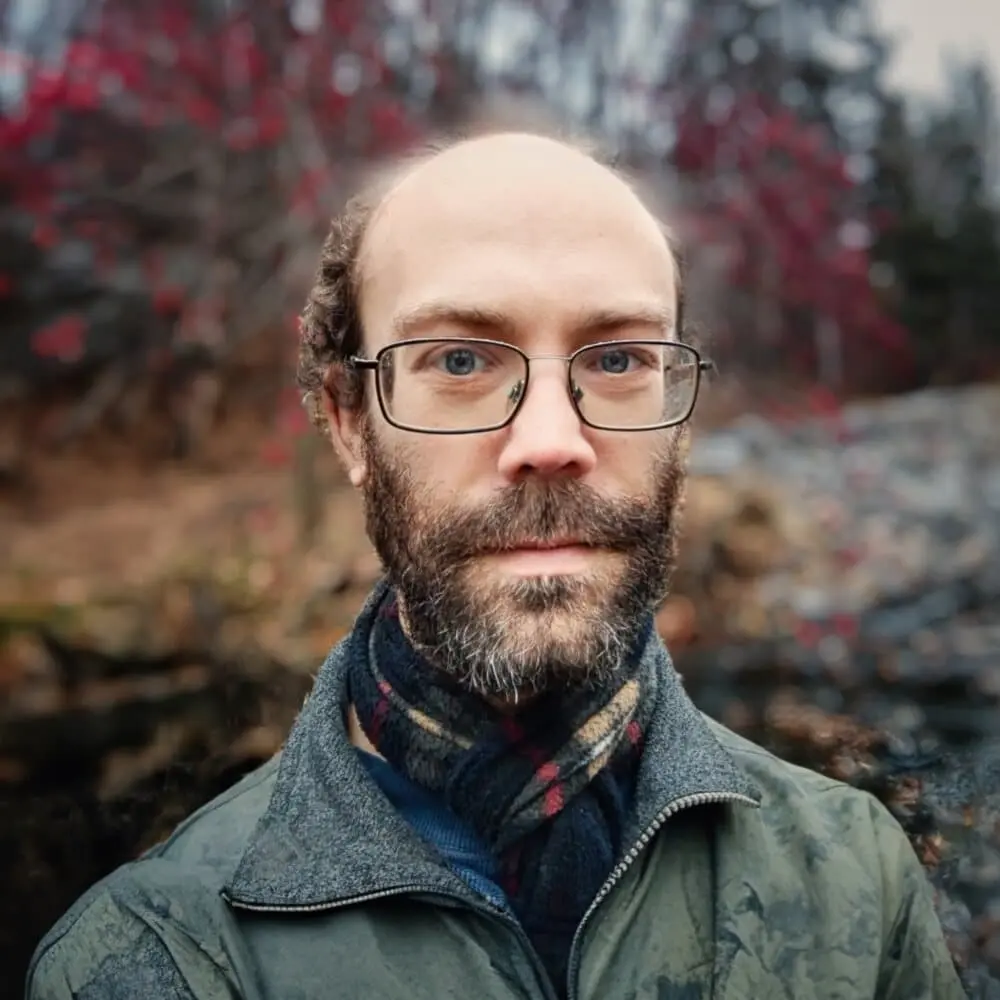
He serves as treasurer for both Operation Fruit Rescue Edmonton and the Edmonton Forest School Society, contributes to the Institute for Contemplative Ecology in various capacities, and works with the Edmonton River Valley Conservation Coalition to protect the river valley as a connected wildlife corridor.
He organizes Riverlot Walks with local historian Tom Monto and co-leads Strong Towns YEG’s local conversations on building resilient communities. His community work centers on ecological education, local food systems, and watershed stewardship.
Several years ago now, Nathan took Ryan First Diver’s Blackfoot Phenology course. That study shifted how he sees and interacts with Edmonton’s river valley. He began visiting a single site at Forest Heights Park through each lunar cycle, tracking recurring patterns and seasonal changes.
His observations became a practice of grounding in place and living time. He noticed sequences: brome grass and wormwood shoot first, then alfalfa, then clover. Snowshoe hares change coats during Sa’Aiki’Somm, the Duck Moon, when river ice breaks and waterfowl begin nesting. Aspen catkins bloom before leaves unfold. These details accumulate into understanding.
Nathan contributed a seven-part phenological engagement series to the EPG blog, sharing observations across Blackfoot lunar cycles from early spring through early fall.
His teaching approach invites people to walk alongside his notes so they can start their own practice of noticing.
You can visit Nathan’s website to learn more about him.
Why Phenology Deepens Ecological Understanding
Phenology teaches through repetition and attention.
A single visit to a park shows what is there that day. Returning monthly through seasons reveals patterns: which plants emerge first, when insects appear, how bird activity shifts with temperature and moon phase.
These observations build a calendar specific to place rather than imposed from elsewhere.
Edmonton’s ecology follows rhythms shaped by latitude, continental climate, and watershed patterns. Generic growing season advice from southern regions rarely applies here. Phenological observation grounds knowledge in local reality. When does your soil warm enough for direct seeding? When do pollinators become active? When does snowmelt peak? The land answers if you watch.
Nathan’s practice draws from Blackfoot phenology, a system refined over generations of careful observation in the Prairie region.
Ryan First Diver teaches this framework, connecting lunar cycles to ecological events like waterfowl nesting during the first full moon after spring equinox. These patterns remain observable today for anyone paying attention.
The Edmonton Permaculture Guild prioritizes applied ecological literacy.
Phenology supports permaculture design by revealing relationships between species, timing interactions, and understanding site-specific conditions.
It also supports personal practice. Regular observation builds familiarity with who lives in a place and what their lives look like through seasons.
Nathan’s blog series offers a starting point for those interested in phenological practice before attending this session.
The posts follow seven Blackfoot lunar cycles at Forest Heights Park, documenting weather patterns, plant sequences, bird migrations, insect emergences, and arachnid activity across months.
Reading through them shows how sustained attention reveals connections a casual walker would miss.
This presentation invites you to begin watching more closely. Start anywhere: your backyard, a neighborhood green space, a stretch of river valley trail. Return regularly. Note what changes. Over time, those observations accumulate into understanding.