Phenological Engagement: Duck Moon (Sa’Aiki’Somm) at Forest Heights Park
Nathan Binnema shares observations from Forest Heights Park during Sa’Aiki’Somm, the Duck Moon, when river ice breaks, early shoots emerge, and waterfowl nest under the first full moon after spring equinox

Nathan Binnema
Lifelong learning through noticing and connection
Phenological Engagement is my practice of learning local ecology through repeated visits to one place in Edmonton’s river valley, paying attention to who lives there and to the key events in their lives in both solar and lunar time.
For the past three years, after a year of study in Blackfoot phenology with Ryan First Diver, I have been visiting this site through each lunar cycle, keeping notes on recurring patterns and seasonal changes. In this series, I invite you to walk alongside these observations so you can deepen your own relationship with the places you return to most often.
We are now in the sixth lunar cycle of winter, the lunar cycle known in the Blackfoot calendar as Sa’Aiki’Somm, or The Duck Moon.
In Ryan First Diver’s course, I learned that one of the most significant events in the phenological calendar occurs on the full moon of this lunar cycle, the first full moon after Equinox.
It is around this time that many of the birds, particularly waterfowl lay their eggs, or begin incubating their eggs. The celebrations of this event are the originals from which the Easter Holiday in the Gregorian calendar were derived.
This lunar cycle is a time of many beginnings. I’ll share a few events I’ve noticed happening around here in my past three years of study in a few major categories.
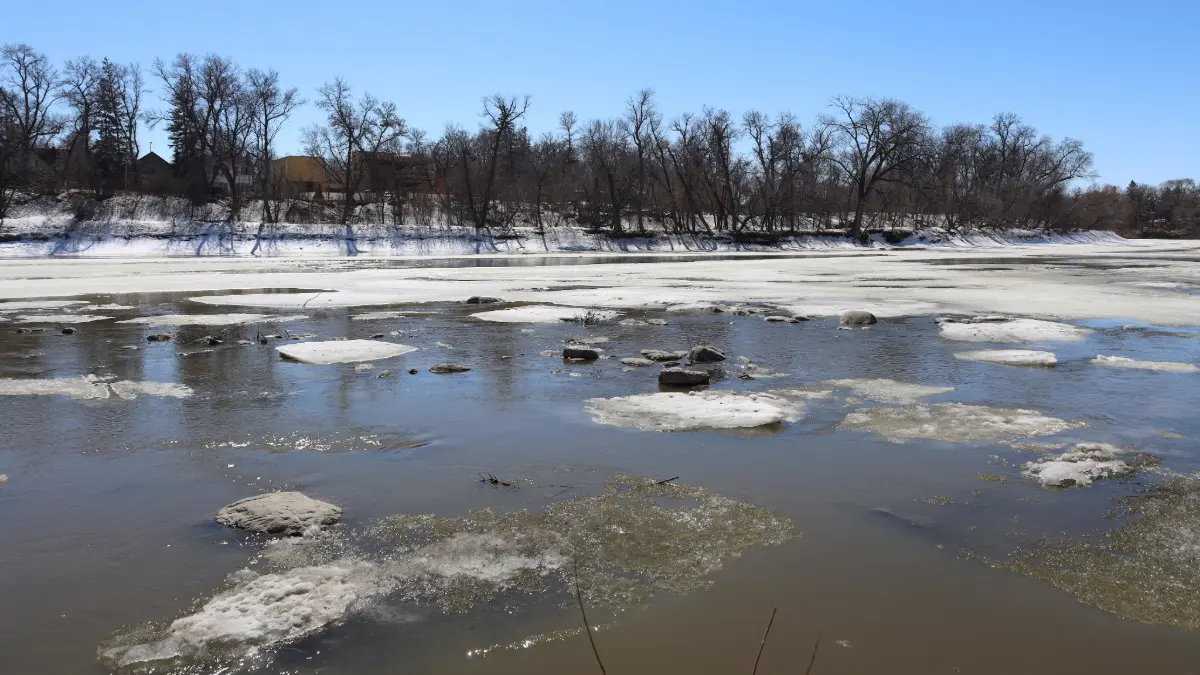
Weather: the river ice thaws, and the snow melts. One year, our only hailstorm was in this lunar cycle – not sure if that was a pattern or an anomaly.
Plants: Green shoots begin to appear. I’ve been able to tentatively ascertain a sequence of brome and wormwood first, then alfalfa, then clover, then wintergreen. Aspen and poplar catkins bloom, and their leaf buds expand.
Saskatoon and prickly rosebuds also appear though actual leafing out, for the most part, does not occur until the next lunar cycle.
Mammals: Snowshoe hares change to their brown summer coats.
Birds: I begin to hear merlins this lunar cycle. Crows, gulls, juncos, robins, and common mergansers return in numbers, though first sightings may occur in the previous lunar cycle. Geese, of course, are nesting.
Insects & Arachnids: Thatching ant mounds wake up. Wolf spiders and fishing spiders appear. I see spider silk strands crisscrossing the forest, though few fully constructed webs.
The first butterflies appear, notably pearl crescents, fire-rimmed tortoiseshells, and mourning cloaks. I begin to see a few flies including blue bottles, green bottles, and hoverflies. In the pools, I see water striders and water boatmen. On the ground, I see tiny shiny black ground beetles.
In this first piece, you will follow my observations through Sa’Aiki’Somm, the Duck Moon, at a single site in Edmonton’s river valley and start to see how one place responds to early spring each year.
Across the series, you will visit the same site during seven Blackfoot lunar cycles, each one named for a key seasonal event.
- Sa’Aiki’Somm – Duck Moon: Associated with nesting and egg laying after the spring equinox at the river valley site.
- Maatsiiyikkapisaiki’somm – Frog Moon: Trees leaf out, frogs call, and many birds and insects become more active.
- Aapistsisskitsaato’s – Flower Moon: First summer cycle when blooming plants dominate the landscape.
- Misamssootaa – Long Rains: Solstice cycle with frequent rainstorms, thunderstorms, and abundant fungi.
- Okonokistsi Otsitsi’tsspi – When the Saskatoons Ripen: Cycle when saskatoon berries reach ripeness and attract birds and other animals.
- Pakkipistsi Otsitsi’tsspi – When the Chokecherries Ripen: Cycle marked by ripening chokecherries and the activity around those shrubs.
- Awakasiki’somm – Deer Moon: Linked to deer mating season and the shift into fall conditions
You will not see every lunar cycle of the year in this series, because the deepest winter moons and the earliest thaw are not yet included.
What you will see is a continuous stretch from early spring through late summer and early fall, enough to give you a sense of how repeated visits reveal patterns in weather, plants, animals, and your own attention.
No doubt there’s a lot more going on – I look forward to learning more with you, as the circle of life continues.